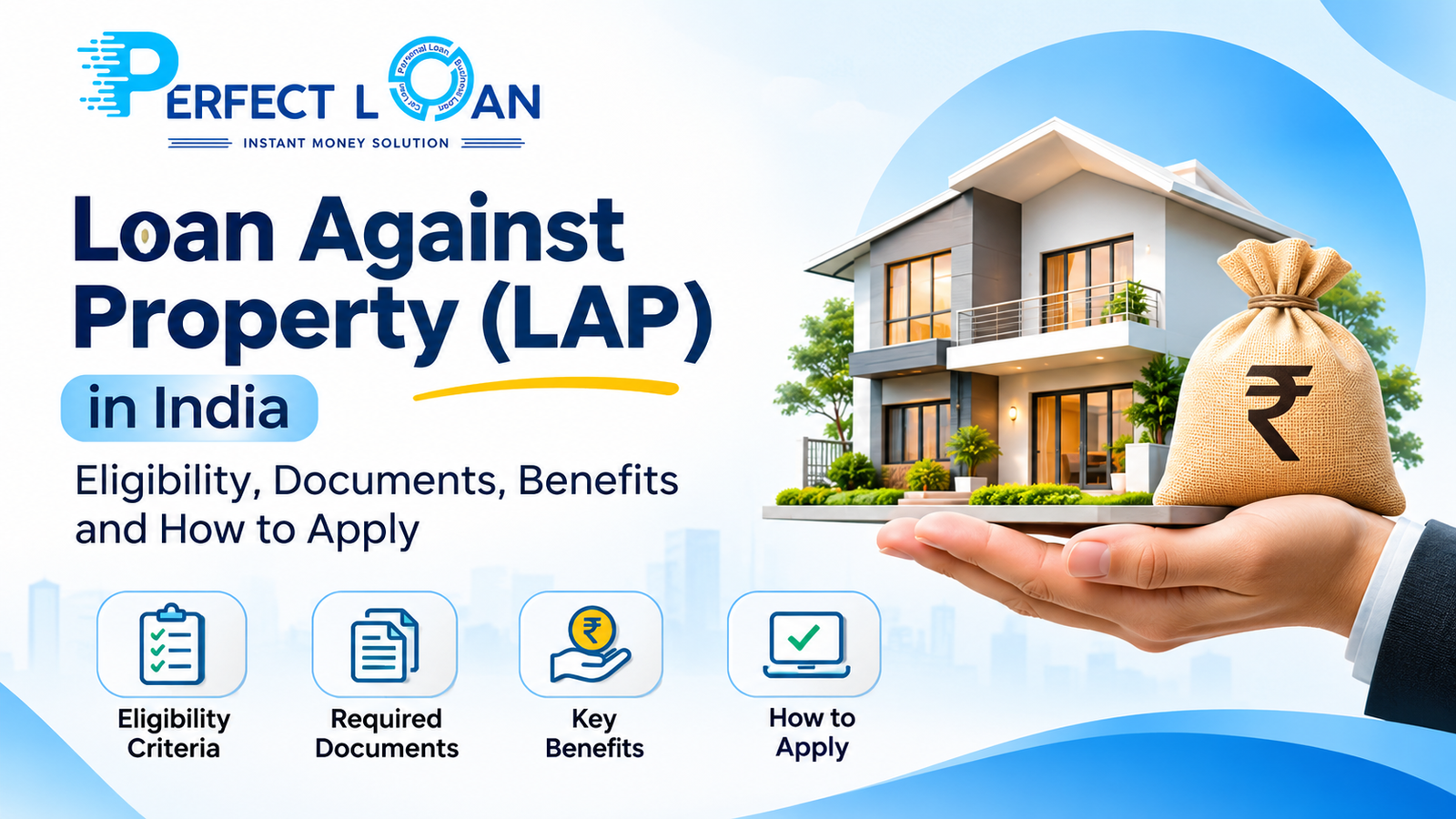
Loan Against Property in India: Eligibility, Documents, Benefits and How to Apply

Sometimes, you need a large amount of money for business expansion, education, medical expenses, or other important financial needs. But arranging funds without selling your property can be difficult.
This is where a Loan Against Property (LAP) can help.
A Loan Against Property allows you to borrow money by keeping your residential or commercial property as security with a bank or financial institution. You can continue using your property while repaying the loan, as long as you follow the lender’s terms and conditions.
In this guide, let’s understand how a loan against property works, who can apply, what documents are required, and what you should check before applying.
What Is a Loan Against Property?
A Loan Against Property, also known as LAP, is a secured loan in which you use your owned property as collateral to get funds.
The property can be residential or commercial, depending on the lender’s policy. The loan amount generally depends on the property’s market value, your income, repayment capacity, existing financial obligations, and the lender’s eligibility rules.
Unlike selling your property, you retain ownership while the loan is active. However, the lender has a security interest in the property until the loan is fully repaid.
Who Can Apply for a Loan Against Property?
Both salaried and self-employed individuals may be eligible for a loan against property.
Generally, lenders consider the following factors:
- Age: The applicant must meet the lender’s minimum and maximum age requirements.
- Income: A stable income helps demonstrate repayment capacity.
- Credit Score: Your credit history and repayment record may affect eligibility.
- Property Ownership: You should have valid ownership documents for the property.
- Property Value: The lender evaluates the property before deciding the eligible loan amount.
- Existing Loans: Your current EMIs and financial commitments are also considered.
Eligibility requirements can vary from one lender to another.
What Types of Property Can Be Used for LAP?
Depending on the lender’s policy, you may be able to apply using:
- Residential house
- Residential flat or apartment
- Commercial property
- Office space
- Shop or showroom
The property must meet the lender’s legal and technical requirements. Properties with ownership disputes or incomplete documentation may not qualify.
Documents Required for a Loan Against Property
Before applying for a Loan Against Property in India, keep the required documents ready.
Personal Documents
- PAN Card
- Aadhaar Card or other accepted identity proof
- Address proof
- Recent passport-size photographs
Income Documents for Salaried Applicants
- Recent salary slips
- Bank statements
- Form 16 or income tax documents, if required
Income Documents for Self-Employed Applicants
- Income Tax Returns (ITR)
- Bank statements
- Business proof
- Financial statements, if required
Property Documents
- Property ownership documents
- Sale deed or title documents
- Approved building plan, where applicable
- Other legal documents requested by the lender
The exact document list depends on the applicant and the financial institution.
What Are the Benefits of a Loan Against Property?
A loan against property can be useful when you need a relatively large amount of funding and own a property.
Here are some possible benefits:
1. Access to Funds Without Selling Your Property
You can use your property as security and continue using it while repaying the loan, subject to the loan agreement.
2. Funding for Different Financial Needs
Depending on the lender’s policy, the funds may be used for business expansion, education, medical expenses, or other permitted purposes.
3. Potentially Longer Repayment Tenure
Some lenders offer longer repayment periods for LAP, which may help spread the repayment amount over time.
4. Options for Salaried and Self-Employed Individuals
Both salaried professionals and eligible business owners may apply.
5. Loan Amount Linked to Property Value
The eligible amount is generally determined by the property’s accepted value and the applicant’s repayment capacity.
What Should You Check Before Applying?
A Loan Against Property is a secured loan, so it is important to understand the terms before signing the agreement.
Keep these points in mind:
- Compare interest rates offered by different lenders.
- Check processing fees and other applicable charges.
- Understand the repayment tenure and EMI amount.
- Ask about foreclosure and prepayment charges, if applicable.
- Review all loan terms carefully.
- Make sure you can comfortably manage the monthly repayment.
Remember, if you fail to repay the loan according to the agreement, the lender may take legal steps to recover the outstanding amount, which can ultimately put your property at risk.
How to Apply for a Loan Against Property?
The application process generally involves the following steps:
Step 1: Check Your Eligibility
Review your income, credit history, property ownership, and existing financial commitments.
Step 2: Arrange Your Documents
Keep your personal, income, and property-related documents ready.
Step 3: Submit Your Application
Share your loan requirements and application details with the lender or lending partner.
Step 4: Property Verification
The lender may conduct legal and technical checks and assess the property’s value.
Step 5: Loan Approval and Disbursement
If your application meets the lender’s requirements, the loan may be approved and disbursed after completing the required formalities.
How Can Perfect Loan Help?
Choosing the right loan option can take time, especially when you are comparing different lenders and their requirements.
At Perfect Loan, we help applicants understand available loan options and the next steps involved in the application process. Based on your requirements, we can help you explore suitable lending options.
Our aim is to make the loan application journey easier by helping you understand the process and the documents involved.
Frequently Asked Questions About Loan Against Property
1. What is the minimum credit score required for a Loan Against Property?
There is no single fixed credit score for every lender. A good credit history can improve your chances, but the final decision depends on the lender’s eligibility criteria.
2. Can I get a Loan Against Property on a commercial property?
Yes, some lenders accept commercial properties as collateral, subject to their property and legal requirements.
3. Can a self-employed person apply for LAP?
Yes. Self-employed applicants may apply by providing income proof, business documents, and property papers required by the lender.
4. Can I continue living in my property after taking a LAP loan?
Generally, yes. You can continue using the property while the loan is active, provided you follow the loan agreement.
5. How much loan can I get against my property?
The amount depends on the property’s accepted market value, lender’s loan-to-value policy, your income, and repayment capacity.
Final Thoughts
A Loan Against Property can be a useful financing option when you need funds and own a property. However, it is important to compare lenders, understand the repayment terms, and assess your financial capacity before making a decision.
Take time to understand the loan conditions so that you can make an informed choice without putting unnecessary pressure on your finances.
Need help exploring Loan Against Property options? Contact Perfect Loan to understand the available options based on your requirements.
Disclaimer: Loan eligibility, interest rates, loan amount, fees, tenure, and approval are determined by the respective lender. Terms and conditions apply.