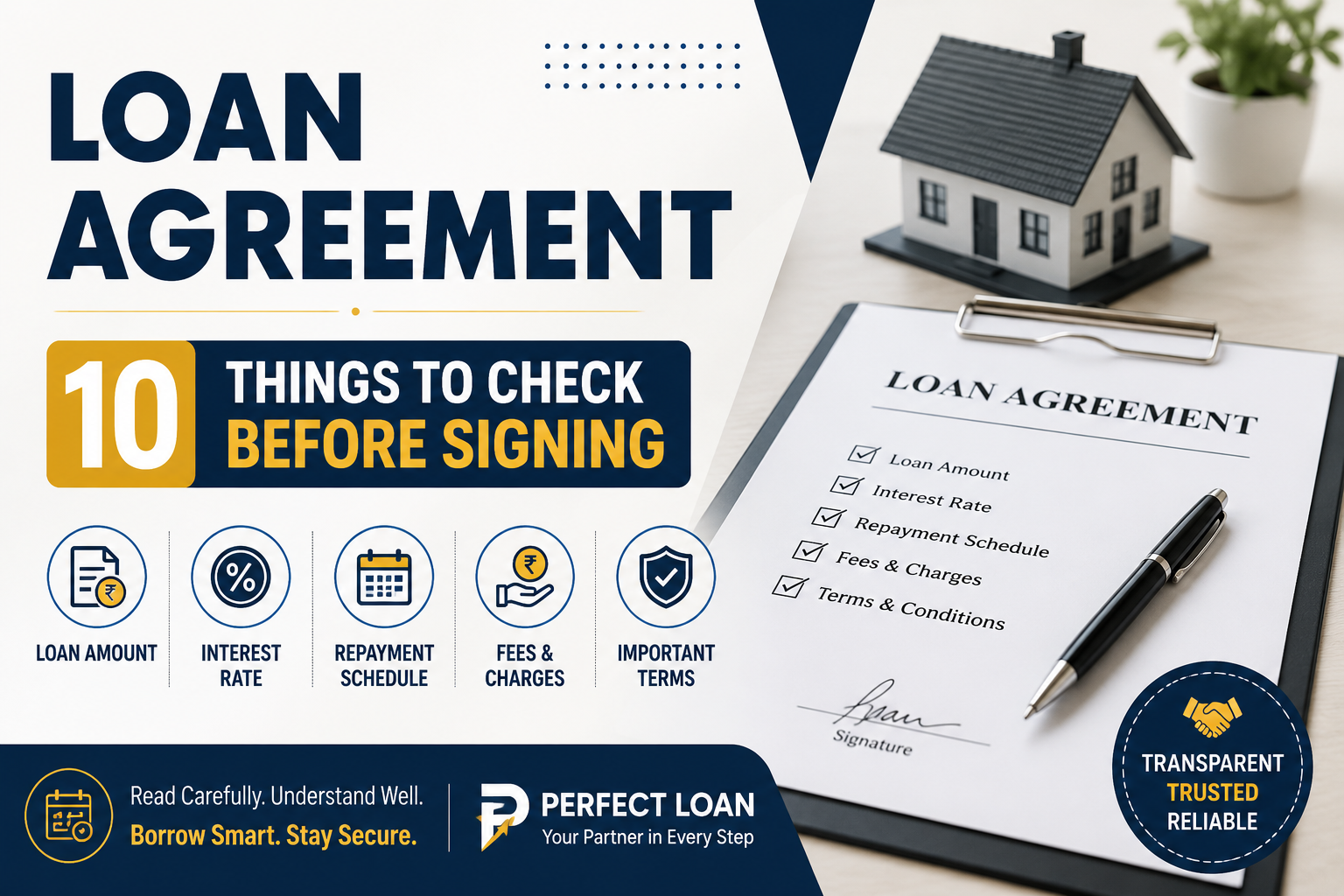
A loan agreement is an important document that contains the terms and conditions agreed upon between a borrower and a lender. Before signing a loan agreement, it is important to understand the loan amount, interest rate, repayment schedule, fees, and other important conditions.
Taking the time to review the agreement carefully can help you understand your financial responsibilities and avoid unexpected issues during the loan repayment period.
Important Things to Check Before Signing a Loan Agreement
Before signing a loan agreement, don’t just look at the loan amount and EMI. There are several other details that are important to check. Going through these points carefully can help you understand your loan better and avoid any confusion later.
1. Check the Loan Amount
First, check the loan amount mentioned in the agreement. Make sure it matches the amount you agreed to borrow. Also check if any processing fees or other charges will be deducted from the amount you receive.
2. Check the Interest Rate
The interest rate directly affects how much you will pay back over the loan period. Check the interest rate mentioned in the agreement and make sure it is the same as what was discussed with the lender.
Also, check whether the rate is fixed or floating and understand how it may affect your EMI or total repayment amount.
3. Check the Loan Tenure
Loan tenure means the total time you have to repay the loan. Check the tenure mentioned in the agreement and make sure it matches the repayment period you agreed to.
A longer tenure may reduce your monthly EMI, but it can also mean paying more interest over the entire loan period.
4. Check the EMI and Repayment Schedule
Before signing, check the EMI amount and repayment schedule mentioned in the agreement. Make sure the EMI, due date, number of instalments, and first payment date are correct.
It is also a good idea to make sure the EMI fits comfortably within your monthly budget.
5. Check Processing Fees and Other Charges
Don’t forget to check the fees and other charges mentioned in the agreement. These may include processing fees, late payment charges, prepayment or foreclosure charges, and other applicable fees.
Knowing these charges beforehand can help you avoid unexpected costs later.
6. Check Late Payment Terms
Before signing the agreement, check what happens if you miss or delay an EMI. Look for any late payment charges or other penalties mentioned in the loan terms.
Knowing these conditions in advance can help you avoid unnecessary charges and keep your repayments on track.
7. Check Prepayment and Foreclosure Terms
If you want to repay your loan early, check the prepayment and foreclosure terms in the agreement. Some loans may have specific conditions or charges for closing the loan before the scheduled tenure.
Understanding these terms beforehand can help you plan your repayment better.
8. Check Default and Recovery Terms
It’s important to understand what happens if you are unable to repay your loan on time. Check the agreement for the terms related to missed payments or loan default.
Make sure you understand your responsibilities and what actions the lender may take in such situations.
9. Check Your Personal and Loan Details
Before signing, carefully check all the personal and loan details mentioned in the agreement. Make sure your name, address, loan amount, interest rate, EMI, and tenure are correct.
If you notice any mistake, get it corrected before signing the document.
10. Check Insurance and Additional Products
Sometimes, a loan may include insurance or other additional products. Check the agreement to understand whether these are included, whether they are optional or required, and what they will cost.
Don’t agree to anything you don’t understand. Ask the lender for clear information before signing.
Loan Agreement Checklist
- Loan amount is correct
- Interest rate is clearly mentioned
- Loan tenure is correct
- EMI amount and due date are clear
- Processing fees and other charges are mentioned
- Late payment charges are understood
- Prepayment and foreclosure terms are clear
- Default conditions are understood
- Personal details are correct
- Insurance or additional products are clearly explained
Why Is It Important to Read a Loan Agreement Carefully?
A loan agreement contains the terms that you agree to when taking a loan. Reading it carefully helps you understand your repayment responsibilities, fees, and other important conditions.
If anything is unclear, don’t hesitate to ask the lender for an explanation before signing. It’s always better to understand the terms beforehand than face confusion later.
Frequently Asked Questions About Loan Agreements
1. What is a loan agreement?
A loan agreement is a document that explains the terms and conditions of a loan, including the loan amount, interest rate, EMI, tenure, and applicable charges.
2. What should I check before signing a loan agreement?
Check the loan amount, interest rate, tenure, EMI, repayment schedule, fees, prepayment terms, and other important conditions before signing.
3. Can I ask questions before signing a loan agreement?
Yes. If you don’t understand any term or condition, ask the lender for clarification before signing the agreement.
4. What happens if I don’t follow the terms of my loan agreement?
Missing payments or not following the agreed terms may result in additional charges or other consequences mentioned in the loan agreement.
Conclusion
A loan agreement is an important document, so don’t rush into signing it. Take some time to check the loan amount, interest rate, EMI, tenure, fees, and repayment terms.
Understanding these details before signing can help you make a more informed borrowing decision and avoid confusion later.
Need Help Choosing the Right Loan?
Looking for the right loan option? Perfect Loan can help you understand your available loan options and guide you through the process.
Contact Perfect Loan today to discuss your loan requirements.