When an emergency comes up, you may need money quickly for things like medical bills, home repairs, or other unexpected expenses. A personal loan or a credit card loan can help, but both work differently.
A personal loan usually gives you a fixed amount with a fixed repayment schedule, while a credit card loan may be easier to access if you already have an available credit limit. But which one is actually better for you?
In this blog, we’ll compare personal loans and credit card loans in simple terms, so you can understand their costs, repayment options, and which one may suit your emergency needs better.
Personal Loan vs Credit Card Loan: What’s the Difference?
Both personal loans and credit card loans can help when you need money for an unexpected expense. However, the way you receive and repay the money is different.
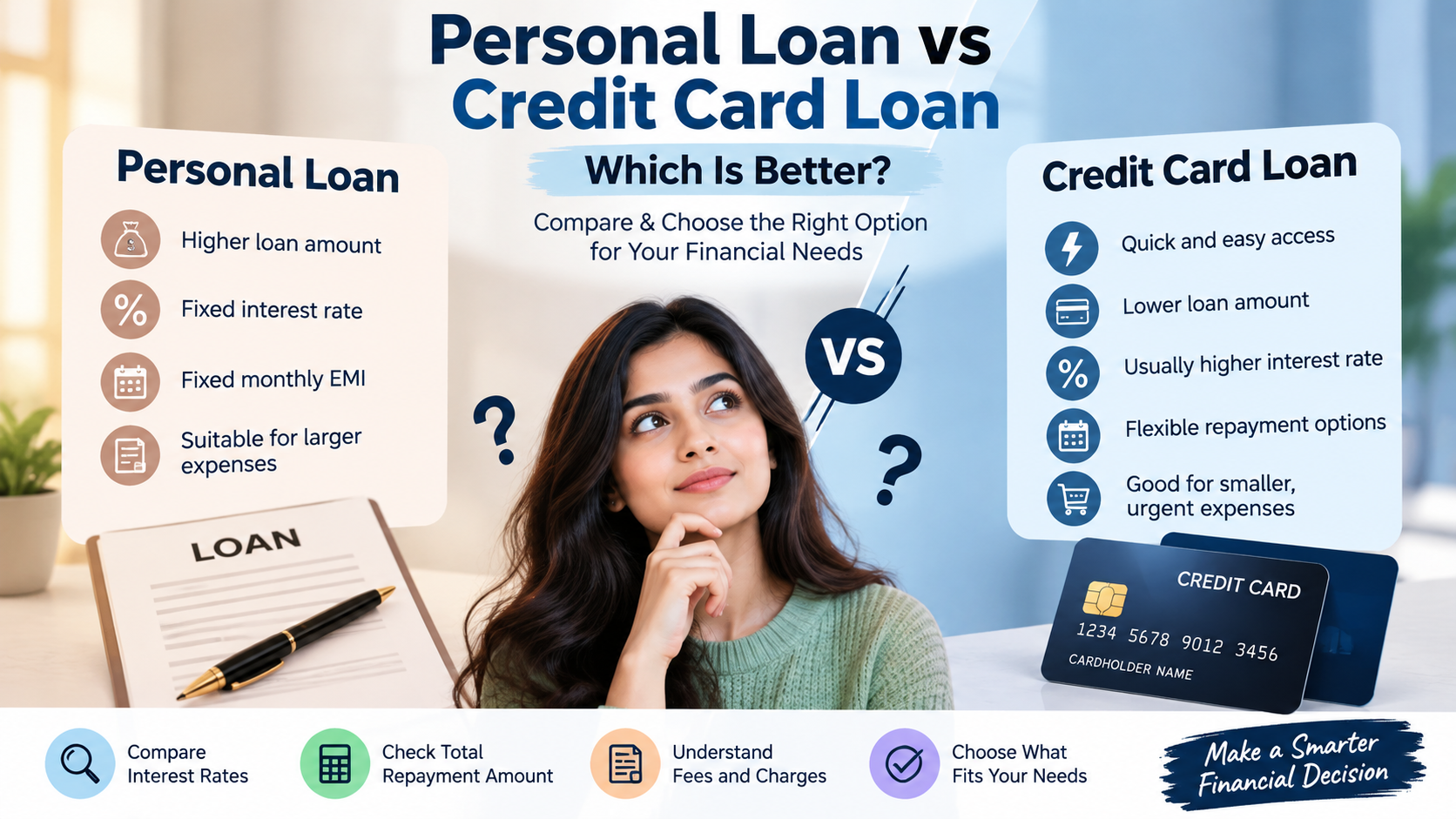
A personal loan gives you a fixed amount of money, which you repay through regular EMIs over an agreed period. It can be useful when you need a larger amount and want a clear repayment plan.
A credit card loan, often called a credit card cash advance or loan against a credit card, allows you to borrow money using your available credit limit. It may be convenient for smaller, urgent expenses, but the interest and charges can vary depending on the lender and the type of facility.
Before choosing either option, it is important to understand the total cost, repayment terms, and whether the monthly payment fits your budget.
Benefits of Choosing a Personal Loan
A personal loan can be a good option when you need a larger amount of money and want a fixed repayment plan. Here are some benefits:
1. Fixed monthly EMIs You know how much you need to pay every month, which makes budgeting easier.
2. Flexible loan amount Depending on your eligibility, you may be able to borrow the amount you need instead of using your entire credit card limit.
3. Longer repayment period Personal loans often come with a fixed tenure, giving you more time to repay the borrowed amount.
4. No need to use your credit card limit A personal loan can keep your credit card available for other expenses.
Benefits of Choosing a Credit Card Loan
A credit card loan can be useful when you need a smaller amount of money quickly. If you already have a credit card, the process may be more convenient than applying for a new loan.
1. Quick access to funds You may be able to get the money quickly, depending on your bank’s process and eligibility requirements.
2. Convenient application process Some credit card loan facilities can be accessed through your bank’s app or online banking.
3. Useful for smaller expenses It may be suitable when you need money for a short-term emergency.
4. No separate loan application in some cases If your bank offers a loan against your credit card, you may not need to apply for a completely new personal loan.
Interest Rate and Total Cost: Which One Is More Affordable?
One of the most important things to compare is the total cost of borrowing. A loan that is easy to get may not always be the cheapest option.
Personal loans generally come with a fixed interest rate and a clear EMI schedule. However, the rate depends on your credit score, income, loan amount, and lender.
Credit card loans may have different interest rates and additional charges. Some credit card facilities may also charge processing fees or other costs.
Before making a decision, compare the interest rate, processing fee, and total repayment amount. This will help you understand how much the loan will actually cost you.
Repayment Period and Monthly EMI
The repayment period is another important factor when choosing between a personal loan and a credit card loan.
With a personal loan, you usually agree to a fixed repayment period and pay a set EMI every month. This makes it easier to plan your monthly expenses.
A credit card loan may also have a fixed repayment schedule, depending on the facility offered by your bank. However, some credit card borrowing options can have different repayment conditions.
Before choosing a loan, make sure you can comfortably afford the monthly payment. A lower EMI may seem attractive, but a longer repayment period can increase the total interest you pay.
Fees and Other Charges to Check
Before taking a loan, don’t look at the interest rate alone. Some lenders may charge processing fees, late payment charges, or other fees.
For a personal loan, check the processing fee, prepayment charges, and any other costs mentioned in the loan agreement.
For a credit card loan, check whether there are processing fees, cash advance charges, or other applicable costs. These charges can vary depending on the bank and the type of loan.
Always ask the lender for a clear breakdown of the total amount you will repay. This will help you avoid surprises later.
Which Loan Is Better for Emergency Expenses?
The better option depends on your financial situation and how much money you need.
A personal loan may be a better choice if you need a larger amount, want fixed EMIs, and prefer a clear repayment schedule.
A credit card loan may be more convenient if you need a smaller amount and already have an available credit limit. However, you should check the interest rate and charges before choosing it.
If you are unsure, compare the total repayment amount of both options. The cheapest option is not always the one with the lowest advertised interest rate.
Things to Check Before Taking a Loan
Before choosing a personal loan or a credit card loan, take a few minutes to compare the important details.
1. How much money do you need? Choose an option that matches your actual requirement. Avoid borrowing more than you need.
2. What is the total repayment amount? Compare the interest rate, processing fee, and other applicable charges.
3. Can you afford the EMI? Make sure the monthly payment fits comfortably within your budget.
4. How quickly can you repay? Choose a repayment period that works for your financial situation.
5. What happens if you miss a payment? Check the late payment charges and other terms before accepting the loan.
6. Is the lender trustworthy? Always check the lender’s details and read the loan agreement carefully.
Conclusion
Both personal loans and credit card loans can help you manage unexpected expenses, but the right choice depends on your needs and repayment ability.
A personal loan may be a better option when you need a larger amount and want fixed EMIs. A credit card loan may be convenient for smaller, urgent expenses, especially if you already have an available credit limit.
Before choosing either option, compare the interest rate, fees, repayment period, and total cost. Most importantly, make sure you can comfortably repay the loan.
Taking a little time to compare your options can help you make a more informed financial decision.
Need Help Choosing the Right Loan?
Choosing the right loan can be confusing, especially when you need money quickly. At Perfect Loan, we help you understand your loan options and choose a solution that suits your financial needs.
Whether you are looking for a personal loan or a business loan, our team can guide you through the process and help you understand the important terms before you apply.
Contact Perfect Loan today to discuss your loan requirements.